Soon stocks will run out
Dont miss this opportunity while supplies last.
Soon stocks will run out
Dont miss this opportunity while supplies last.



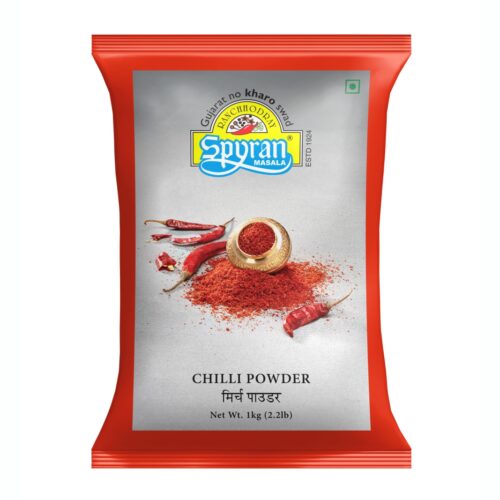
Shertha Chilly Powder
Shertha Chilli Powder – Gujarati Red Chilli Powder with Low Heat & Rich Colour
Shertha chilli powder is one of a handful of Gujarati chillies that gets its name from a place rather than a botanical class. Traders and cooks around Gandhinagar have called this particular red chilli “Shertha” for as long as anyone can remember, after the belt where it is grown and traded, and the name has stuck the way local names do even when the chilli itself is never formally classified anywhere. What matters to a cook is simpler: it colours a pot beautifully and barely raises the heat while doing it.
Available in convenient pack sizes with delivery across India. The shertha chilli powder price for each pack is listed above.
How to Identify Good Shertha Chilli Powder
- Deep, even red colour with no dull or brownish patches
- Fine, silky texture that dissolves into a gravy without leaving grit
- Mild, rounded aroma rather than a sharp, throat-catching one
- No clumping or dampness in the pack
- A gentle warmth on the tongue, not a lingering burn
Shertha mirchi powder gets its name from Shertha, a village near Gandhinagar known locally for the chilli variety grown in the surrounding farms. Cooks across Gujarat reach for it specifically when they want a dish to look rich without turning up the heat, which is a more common requirement in everyday cooking than most non-Gujarati kitchens expect. Unlike a formally bred cultivar with a fixed Scoville range on record, Shertha is a trade name: the exact heat can drift slightly batch to batch depending on the season\'s crop, which is normal for a regionally sourced chilli rather than a sign of inconsistency.
What sets this apart from a generic gujarati red chilli powder is the colour-to-heat ratio. Most chilli powders sold as \"mild\" still carry more heat than Shertha does. This one leans almost entirely on colour, with just enough warmth in the background to remind you it is chilli and not paprika. That balance is why it turns up so often in dishes meant for the whole family, including children and older relatives who cannot handle a sharper mirchi.
Texture matters here too. A coarse grind leaves flecks sitting on top of a kadhi instead of blending in. Spyran grinds Shertha chillies fine enough that the colour spreads evenly through the dish rather than pooling in spots, which is the difference between a pot that looks seasoned and one that looks like someone dusted chilli on top at the last minute.
If you have been buying a low heat red chilli powder from a local market stall and want the same character in a sealed, hygienic pack, this is the one to try. The shertha chilli powder price is shown above for each pack size, and delivery covers the whole country.
Shertha Chilli Powder Usage
- Gujarati Dal & Kadhi — Added to the tempering or while cooking to get a good red colour and gentle spice without making the dish too hot, a common use in traditional Gujarati cooking.
- Thepla & Stuffed Parathas — Mixed into the dough along with other spices. Because shertha mirchi powder carries lower heat, it can be used generously without the bread turning too spicy.
- Everyday Sabzis & Curries — Used in place of or alongside regular chilli powder in potato, cauliflower, or mixed vegetable dishes where colour matters as much as heat.
- Undhiyu & Seasonal Dishes — A natural fit in traditional Gujarati recipes like undhiyu, where the spice blend needs to feel well-rounded rather than simply hot.
- Farsan & Snack Preparations — Used in chakli, sev, or gathiya dough where a low heat red chilli powder gives colour and flavour to fried snacks without overpowering them.
- Marinades & Rubs — Blended with other spices for marinating vegetables or paneer where a red colour and mild spice level is what the recipe calls for.
Recipe: Gujarati Kadhi with Shertha Chilli Powder
This is the dish Shertha chilli powder is arguably best known for in a Gujarati kitchen — a sweet-tangy besan and buttermilk curry where the chilli\'s job is colour and gentle warmth, not heat.
- Whisk 2 tbsp besan (gram flour) into 2 cups sour buttermilk until completely smooth, no lumps.
- Add ½ tsp turmeric, salt, and a little jaggery to taste; bring to a gentle boil, stirring often so it doesn\'t split.
- Simmer on low for 10–12 minutes until the raw besan smell disappears and the kadhi thickens slightly.
- For the tempering: heat 1 tbsp ghee, add mustard seeds, cumin, a pinch of hing, curry leaves, and a whole dried red chilli.
- Off the heat, stir in ½ tsp Shertha chilli powder so the ghee turns a rich red without the tempering scorching.
- Pour the tempering over the kadhi, cover for two minutes to let the aroma settle, then serve hot with khichdi or rice.
Dishes That Use Shertha Chilli Powder
- Gujarati dal and kadhi
- Thepla, rotla and masala roti
- Undhiyu and mixed vegetable sabzi
- Sev, gathiya and chakli
- Pickles and raw chutneys
- Handvo and dhokla batter
How to Store Shertha Chilli Powder
Transfer the powder to a clean, airtight container after opening and keep it in a cool, dry place away from sunlight and the stove. Chilli powder fades in both colour and flavour faster than most spices once it is exposed to heat and light, so a jar sitting near the gas is the fastest way to dull it. Use within six months of opening and always dip in with a dry spoon, since moisture is what turns any ground chilli lumpy.
Shertha or Reshampatti: Which Gujarati Chilli Powder to Pick
Spyran stocks both, and the two exist for opposite reasons. Shertha chilli powder is built for colour first, with a soft, forgiving heat that suits everyday family cooking and dishes where children are eating too. Reshampatti chilli powder goes the other way, carrying a bolder, more assertive heat for cooks who want the mirchi to be felt, not just seen. If a recipe says \"mild\" or you are cooking for mixed spice tolerances, reach for Shertha. If it says \"tikha\" and means it, Reshampatti is the one.
Additional information
| Weight | 200 g, 500 g |
|---|---|
| HSN Code | 09109100 |
Related products
Reviews
There are no reviews yet.